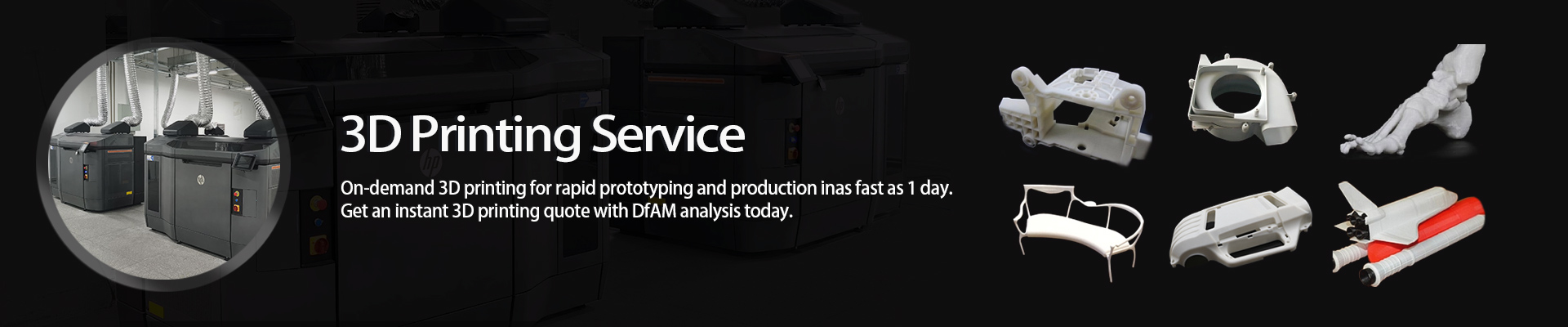
In the fast-evolving world of product development and manufacturing, the terms "rapid prototyping" and "3D printing" are often used interchangeably. After all, they both contribute to the speedy creation of prototypes and offer innovative solutions to design and testing challenges. However, are these two processes truly synonymous, or do they represent distinct technologies with unique capabilities? Here, we will unravel the distinctions between rapid prototyping and 3D printing, explore their respective advantages, and by the way, introduce you to a trusted partner in the field - Top Prototype, your premier source for Rapid Prototype Machining Services.
Rapid Prototyping vs. 3D Printing: A Comparative Analysis
Understanding Rapid Prototyping
What is Rapid Prototyping?
Rapid prototyping is a comprehensive term that encompasses various techniques and processes aimed at quickly fabricating a physical model or prototype of a part or product. It serves as a critical step in product development, allowing engineers and designers to validate concepts, test functionality, and make design improvements before moving into full-scale production.
The Techniques: Rapid prototyping encompasses techniques such as CNC machining, injection molding, sheet metal fabrication, and yes, 3D printing. These techniques differ significantly in terms of materials used, precision achieved, and production capabilities.
Materials: Rapid prototyping methods can use a wide range of materials, including metals, plastics, ceramics, and composites. The choice of material depends on the specific requirements of the project.
Applications: Rapid prototyping finds applications in various industries, including aerospace, automotive, healthcare, and consumer electronics, among others. It is employed for creating prototypes of components, parts, and products.
Understanding 3D Printing
What is 3D Printing?
3D printing, also known as additive manufacturing, is a specific subset of rapid prototyping. It involves the layer-by-layer deposition of material, often in the form of thermoplastics or photopolymers, to create a three-dimensional object based on a digital model. 3D printing has gained widespread attention for its ability to produce complex geometries with precision and efficiency.
The Process: 3D printing builds objects layer by layer, fusing or curing the material to form the final product. It is a versatile process that allows for intricate designs and rapid iteration.
Materials: While 3D printing primarily uses plastics and resins, advancements have expanded the material options to include metals, ceramics, and even biocompatible materials suitable for medical applications.
Applications: 3D printing is prevalent in industries like healthcare (custom implants and prosthetics), aerospace (lightweight components), and consumer goods (customized products), as well as in rapid prototyping.
Key Differences Between Rapid Prototyping and 3D Printing
Scope and Versatility
Rapid prototyping encompasses a broader spectrum of techniques, including CNC machining, injection molding, and more.
3D printing is a subset of rapid prototyping, focusing exclusively on additive manufacturing processes.
Materials
Rapid prototyping offers a wider range of material options, including metals, ceramics, and composites.
3D printing primarily employs plastics and resins, with limited use of other materials like metals.
Precision
CNC machining, a form of rapid prototyping, provides high precision, often surpassing the accuracy of 3D printing.
3D printing excels in producing complex and intricate designs but may have lower precision compared to CNC machining.
Production Capabilities
Rapid prototyping techniques like CNC machining and injection molding are well-suited for low to high-volume production.
3D printing is generally more efficient for producing prototypes and small to medium batch production.
The Advantages of Rapid Prototyping
1. Material Versatility: Rapid prototyping offers a wide selection of materials, allowing engineers to choose the best fit for the project's requirements.
2. High Precision: Techniques like CNC machining provide exceptional precision, crucial for applications in aerospace, automotive, and healthcare.
3. Diverse Applications: Rapid prototyping encompasses various techniques suitable for different industries and applications, providing flexibility and adaptability.
4. Scalability: Rapid prototyping methods can scale from creating a single prototype to producing thousands of parts.
5. Quality Control: Rigorous quality control measures are integrated into the rapid prototyping process to ensure prototypes meet stringent industry standards.
Rapid Prototype Machining Services Provider--Top Prototype
About Top Prototype
Top Prototype stands as a trusted leader in Rapid Prototype Machining Services. With a proven track record of excellence, we have been serving clients across industries for 10 years. With a focus on rapid turnaround times, exceptional post-sale support, and competitive pricing, we are dedicated to delivering premium quality prototypes. Our comprehensive array of testing equipment, in-house manufacturing facilities, and cutting-edge equipment ensures the highest standards of excellence.
Why Choose Top Prototype?
Expertise: Our team consists of seasoned professionals with extensive experience in CNC machining, injection molding, and other rapid prototyping techniques.
Cutting-Edge Technology: We invest in state-of-the-art equipment to ensure precision and efficiency in every project.
Customization: We understand that every project is unique. Our collaborative approach allows us to tailor our services to meet your specific requirements.
Quality Assurance: Our stringent quality control processes guarantee the reliability and accuracy of your prototypes.
Competitive Pricing: We believe that precision doesn't have to come at an exorbitant cost. We offer cost-effective solutions without compromising on quality.
In the journey of product development and innovation, the choice between rapid prototyping and 3D printing can be pivotal. While these terms are often used interchangeably, they represent distinct methods with unique capabilities. Rapid prototyping, encompassing a spectrum of techniques, provides versatility, precision, and scalability, making it a preferred choice for various industries.
As you navigate the intricate landscape of prototyping and manufacturing, remember that Top Prototype is here to be your partner in precision. Contact us today, and let us help you turn your concepts into precision-engineered realities. For inquiries, quotes, and more, contact us now!