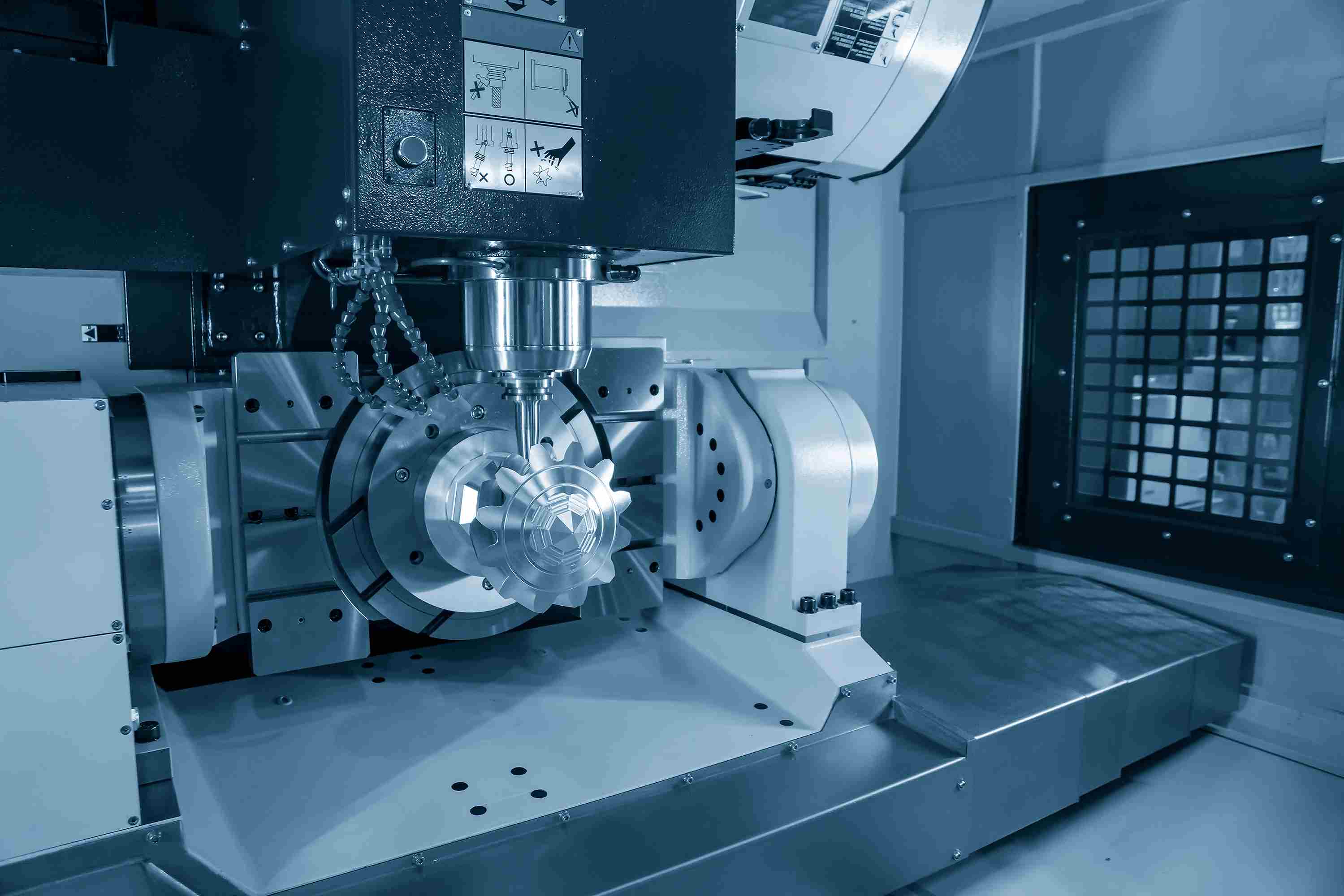
Beyond Standard Machining: Swiss Precision & Small CNC Lathe Mastery for Complex Components
In the relentless pursuit of manufacturing excellence, where component complexity escalates, tolerances shrink towards the micron level, and lead times demand unprecedented compression, partnering with a machining provider possessing genuine expertise becomes paramount. This is the domain of the specialized custom manufacturer, equipped not just with machines, but with deep process knowledge and the agility to navigate intricate production challenges. For parts demanding the absolute pinnacle of precision, repeatability, and efficiency – particularly high-volume, complex, miniature, or bar-fed components – the precision automatic lathe, specifically the Swiss Lathe Machining parts Shop , reigns supreme. Complementing this, the versatile small CNC lathe offers unparalleled agility for prototypes, shorter runs, and slightly larger yet still intricate parts. Understanding the distinct advantages and strategic application of these technologies, backed by rapid delivery and uncompromising quality assurance, is critical for engineers and procurement specialists navigating today's competitive landscape.
Swiss Lathe Machining parts Shop : Engineering at the Microscale
Often referred to as a Swiss-type automatic lathe or sliding headstock lathe, this machine represents a paradigm shift in precision turning. Its core innovation lies in the moving headstock and guide bushing. The bar stock is firmly gripped and supported very close to the cutting tools by a guide bushing, drastically minimizing deflection during machining. This fundamental principle unlocks capabilities far beyond conventional turning:
-
Unmatched Precision & Repeatability: The guide bushing support enables machining complex features on long, slender parts – think medical guide wires, intricate hydraulic spools, or tiny connector pins – with tolerances routinely holding within ±0.0002 inches (±0.005mm) or tighter, batch after batch. This level of consistency is the hallmark of a top-tier precision automatic lathe operation.
-
Complexity in a Single Chucking: Swiss lathes excel at complete machining in one setup. Equipped with multiple cross-working tools (live tooling for milling, drilling, tapping off-center) and main spindle tools, they can produce parts with intricate geometries, cross-holes, flats, grooves, and threads that would require multiple operations and fixtures on other machines. This drastically reduces handling, potential errors, and overall cycle time.
-
High-Volume Efficiency: Once programmed and proven out, a Swiss Lathe Machining parts Shop operates with exceptional autonomy. Bar feeders continuously load new material, allowing for lights-out production runs. The simultaneous machining capability (tools working concurrently) further optimizes cycle times, making it ideal for high-volume medical, aerospace, electronics, and automotive components.
-
Superior Surface Finishes: The minimal vibration and deflection translate directly to exceptional surface finishes, often eliminating or significantly reducing secondary finishing operations. This is crucial for sealing surfaces, bearing journals, and aesthetic components.
The Strategic Role of the Small CNC Lathe: Agility and Versatility
While the Swiss lathe dominates the micro-precision high-volume arena, the small CNC lathe is the workhorse of agile, precision manufacturing for a broader range of part sizes and volumes. Typically referring to compact, 2-axis or 3-axis (with live tooling) turning centers with smaller footprints and chuck sizes (often up to 8" or so), these machines offer distinct advantages:
-
Rapid Prototyping & Low-Volume Agility: Setting up a small CNC lathe is generally faster and requires less specialized fixturing than a Swiss machine for many parts. This makes them perfect for prototyping new designs, engineering revisions, and low-to-medium volume production runs where flexibility is key. Quick changeovers are a standard feature.
-
Cost-Effectiveness for Simpler Geometries: For parts that don't require the extreme support of a guide bushing or the simultaneous multi-tasking of a Swiss machine, a small CNC lathe provides a highly cost-efficient solution. Machining simpler shafts, bushings, spacers, or flanges becomes significantly more economical.
-
Handling Slightly Larger, Robust Parts: While Swiss lathes handle delicate, long-thin parts, small CNC lathes comfortably machine slightly larger diameter and shorter, more robust components that might be impractical or inefficient on Swiss equipment. They bridge the gap between micro-precision and larger production lathes.
-
Simpler Programming & Operation (Relatively): Programming a standard 2-axis turning cycle on a small CNC lathe is often more straightforward than the complex, multi-axis synchronizations required for intricate Swiss parts, potentially speeding up the initial production phase for less complex items.
The Synergy: Leveraging the Right Tool for the Job
The most effective custom manufacturer doesn't force a single solution but possesses a strategic arsenal and the expertise to deploy it optimally. Here’s how a sophisticated shop integrates these technologies:
-
Complex, Miniature, High-Volume: A Swiss Lathe Machining parts Shop is the undisputed choice. Think dental implants, surgical instrument components, watch parts, complex fluidic connectors, micro-electronic housings. The precision automatic lathe capabilities here are essential.
-
Prototypes, Medium Volumes, Slightly Larger Parts: The small CNC lathe shines. Examples include prototype engine components, sensor housings, specialized fasteners, drive shafts for smaller assemblies, and components needing quick iterations.
-
Hybrid Parts: Sometimes, the ideal solution involves both. A complex part might have features best machined on the Swiss machine, while secondary operations (like a specific milled feature) are efficiently handled on a small CNC lathe with live tooling or a dedicated mill. A unified custom manufacturer streamlines this process.
Beyond the Machine: The Pillars of Partnership
Owning advanced equipment like precision automatic lathes or small CNC lathes is necessary but insufficient. True partnership with a custom manufacturer hinges on additional critical factors:
-
Engineering Collaboration: The best outcomes arise from early engagement. A partner who can analyze your design for manufacturability (DFM), suggesting optimizations for Swiss turning or standard CNC lathe processes to enhance quality, reduce cost, and shorten lead times, is invaluable. Expertise in material selection and process planning specific to these technologies is crucial.
-
Uncompromising Quality Assurance: Quality assurance must be ingrained at every step. This means:
-
Rigorous First Article Inspection (FAI) using advanced CMMs (Coordinate Measuring Machines) and optical comparators.
-
Statistical Process Control (SPC) during production runs on Swiss Lathe Machining parts Shop lines and small CNC lathe cells.
-
Comprehensive final inspection against all critical dimensions and specifications.
-
Adherence to relevant standards (ISO 9001, AS9100, ISO 13485).
-
Detailed documentation and traceability for every batch.
-
-
Rapid Delivery - The Competitive Imperative: In today's market, speed is non-negotiable. A proficient partner leverages:
-
Optimized Scheduling: Intelligent planning across Swiss Lathe Machining parts Shop and small CNC lathe resources to minimize bottlenecks.
-
Advanced Tooling & Setup: Utilizing quick-change tooling systems and standardized setups to drastically reduce non-cutting time on precision automatic lathes and standard machines.
-
In-House Secondary Operations: Offering value-added services (deburring, finishing, plating, anodizing, assembly) under one roof eliminates external delays.
-
Proactive Supply Chain Management: Ensuring material availability is key to enabling rapid delivery.
-
-
Material Mastery: Expertise extends to machining a vast array of materials – from challenging aerospace alloys (Inconel, Titanium) and stainless steels to engineering plastics, brass, copper, and aluminum – understanding the unique cutting parameters required for each on both Swiss and conventional small CNC lathes.
Applications Demanding Precision Automatic Lathe & Small CNC Lathe Expertise
-
Medical & Dental: Implants, surgical tools, endoscopic components, dental abutments, biopsy needles (Swiss Dominant). Instrument housings, casings, connectors (Small CNC Lathe).
-
Aerospace & Defense: Fuel system components, hydraulic valve bodies, sensor probes, fasteners, actuation parts (Both Swiss & Small CNC).
-
Electronics: Connector pins, sockets, micro-shafts, RF components, semiconductor parts (Swiss Dominant). Enclosures, heatsinks, waveguides (Small CNC Lathe).
-
Automotive: Fuel injector components, transmission sensors, valve train parts, custom fasteners, turbocharger components (Both Swiss & Small CNC).
-
Industrial Equipment: Precision valves, fluidic controls, pneumatic cylinders, sensor components, specialized fittings.
Choosing Your Custom Manufacturing Partner: Critical Questions
-
Swiss Lathe Machining parts Shop Capability: How many machines? What makes/models (Citizen, Star, Tsugami, Tornos)? Bar capacity? Guide bushing range? Live tooling configurations? Multi-spindle experience?
-
Small CNC Lathe Capability: Number and type of machines? Chuck sizes? Live tooling (C/Y-axis)? Bar feeder integration? Multi-pallet systems?
-
Quality Systems: What certifications (ISO, AS, etc.)? Describe in-process and final inspection capabilities (CMM, optical, surface finish). What is the SPC process? Traceability procedures?
-
Engineering Support: Do you offer proactive DFM analysis? Experience with complex materials? CAD/CAM capabilities? Prototyping process?
-
Rapid Delivery Track Record: What are typical lead times for prototypes and production? How do you manage scheduling and expedite requests? What in-house secondary ops are available?
-
Industry Experience: Specific examples in our target sectors (Medical, Aerospace, etc.)? References?
Conclusion: Precision, Agility, Partnership
Navigating the complexities of modern component manufacturing requires more than just machine tools; it demands a strategic partnership with a custom manufacturer possessing deep technological mastery and a commitment to excellence. The Swiss lathe machining parts shop delivers unparalleled precision and efficiency for the most demanding miniature and complex, high-volume components. The versatile small CNC lathe provides the agility and cost-effectiveness crucial for prototypes, shorter runs, and slightly larger precision parts. Together, these capabilities, managed by expert engineers and supported by robust quality assurance systems and a relentless focus on rapid delivery, form the foundation for manufacturing success. By selecting a partner who excels in both domains and embodies these core principles, you secure not just parts, but a reliable competitive advantage built on precision, speed, and unwavering quality. Invest in expertise; unlock the potential of precision automatic lathe technology and agile small CNC lathe solutions.